Allow me, as one who has returned to Japan more times over the past 2 years than is sensible for a supposedly rational adult, to offer a piece of earnest advice.
Do not go to Japan.
Do not go if you value emotional equilibrium. Do not go if you prefer your expectations modest and your affections contained. Do not go if you are content with ordinary politeness, transactional service and landscapes that merely exist rather than speak.
For Japan has an unsettling habit of ruining other destinations forever. It will recalibrate your sense of courtesy, dislocate your standards of civilisation, and quietly render the rest of the world rather inadequate by comparison.
You will find yourself measuring urban infrastructure against Tokyo, calm against Kagoshima, nature against Hokkaido, and humanity against a people who appear to have perfected it.
Worse still, you will not merely enjoy Japan. You will miss it. You will crave it in moments of stress, in seasons of fatigue, in conversations about travel, and in places that try, valiantly and unsuccessfully, to be what Japan is without effort.
And then, when you think you are cured, you will return. Again. And again. And again. So, if you value emotional safety and geographic neutrality, spare yourself the affliction. Do not visit Japan. Because once it receives you, the world will never feel quite sufficient again.
You see, dear reader, the danger lies not in Japan’s famous temples, nor in its trains that arrive with unnerving punctuality, nor even in its culinary excesses that will permanently alter your standards of food. The true peril is subtler.
It is the way the country receives you, with a gentleness that unsettles and a courtesy that feels almost intimate. It is the manner in which strangers take responsibility for your comfort without asking, and how the smallest interactions are conducted with a gravity usually reserved for ceremony. You will begin to notice that queues are not battlegrounds, that silence is not awkward, and that kindness is not negotiable. You will grow accustomed to being guided, considered and quietly protected by a civilisation that appears to have mastered the art of being human. You will find your pace slowing, your irritations softening, and your expectations shifting.
And that is precisely the problem. Because once you have tasted such composure, such order, and such unforced benevolence, the rest of the world will seem unnecessarily loud, unnecessarily coarse and unnecessarily hurried. You will return home afflicted by a peculiar discontent, longing for a land where even the mundane is treated with reverence and where peace is not an aspiration but a default setting. Consider yourself warned.
To know the country, one must first know its people
Heisei spirit, but the quote is often associated with Emperor Akihito, former Emperor of Japan
Japan – It’s more than a Country. It’s an Emotion
Reason 1: People remember loyalty
There are cultures that reward expenditure, cultures that reward status, and cultures that reward visibility.
Japan rewards loyalty.
Quietly. Without announcement. Without ledger. Without spectacle.
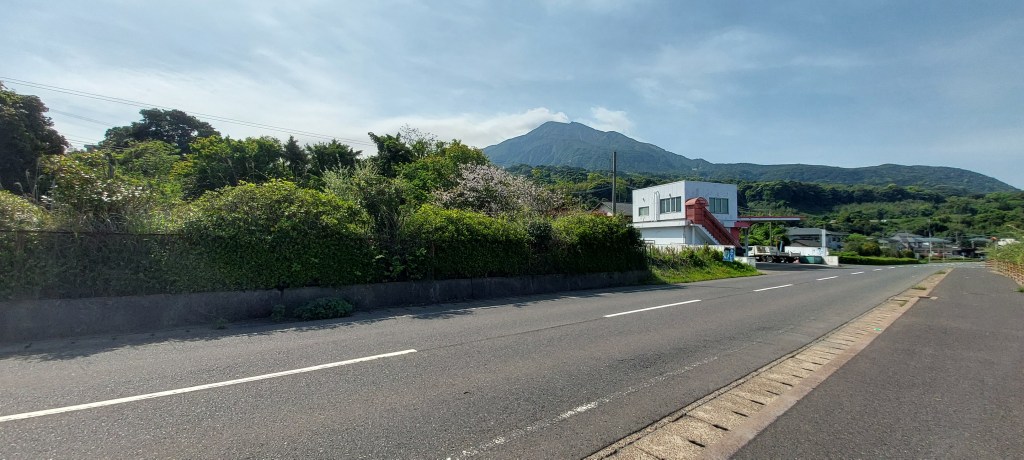
I visited Sakurajima twice, nothing more, nothing less, and in that simple act of return I was recognised. Not as a customer, not as a statistic, but as someone who had come back. That alone was enough. I was offered matcha teacakes, free of cost, without asking, without hinting, without even the faintest suggestion. No ceremony, no flourish, no expectation of gratitude. Just a gentle offering, as though this were the most natural thing in the world.
This is not marketing.
This is not strategy.
This is cultural memory in motion.
In Japan, loyalty is not monetised, it is remembered. And remembrance here is not sentimental, it is behavioural. It manifests in small, precise gestures that carry disproportionate emotional weight. To return is to be acknowledged. To be acknowledged is to be honoured.
In an age obsessed with novelty and first impressions, Japan quietly reveres the second visit. And therein lies its profound difference.
Japan does not chase you. It keeps you.
Note: For the uninitiated, Sakurajima is an active Supervolcano in Japan, located to the south of the country’s southernmost main island, Kyushu. It erupts frequently, often several times a day
Reason 2: Hospitality before self
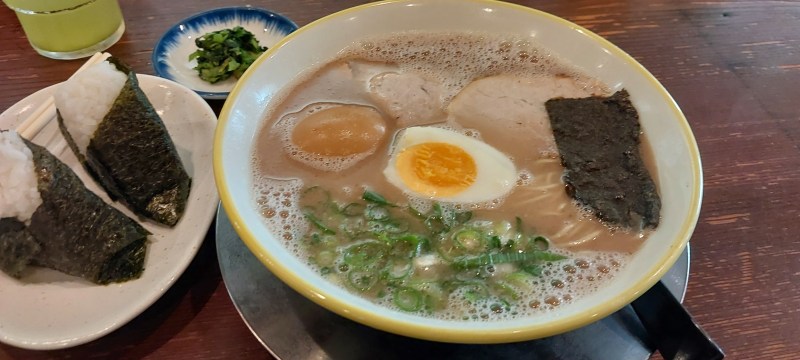
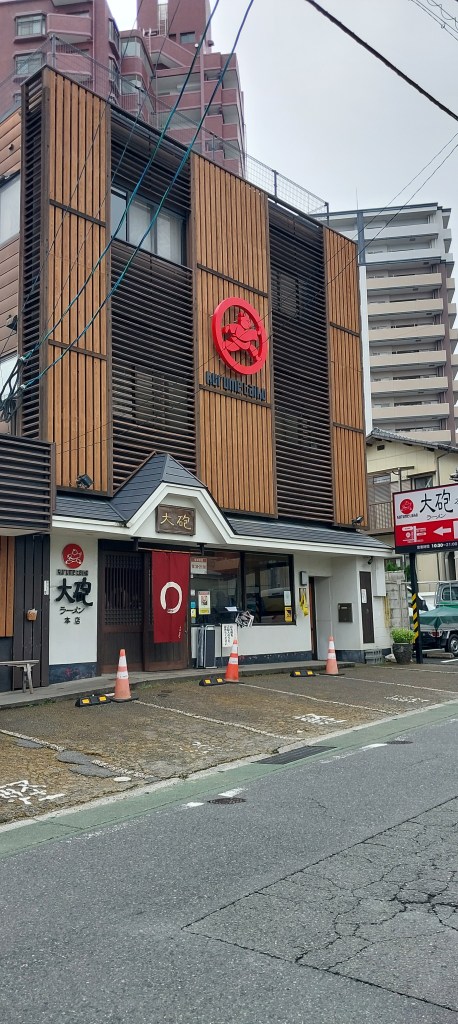
In many parts of the world, hospitality is a profession. In Japan, it is a priority of conscience. I witnessed this most disarmingly at Taiho Ramen in the Kurume, Fukuoka Prefecture, where an elderly couple relinquished their own place in the queue for me. I had not asked. I had not gestured. I had not even made my presence known beyond existing. And I felt bad for them and repeatedly urged them to enter first. Yet the offer was made, instinctively and without hesitation, as though the comfort of a stranger carried equal, if not greater, importance than their own supper.
This is not generosity in the theatrical sense. It is not charity, nor is it performance. It is social reflex. It is Omotenashi / おもてなし in action, in its full glory. A deeply ingrained belief that the guest must come first, not because etiquette demands it, but because culture expects it. In Japan, hospitality does not wait to be summoned. It arrives unannounced. It does not seek acknowledgment. It does not require gratitude. It simply happens.
There is something profoundly disarming about being prioritised by someone who owes you nothing. It rearranges your assumptions about human behaviour. It challenges the quiet cynicism that modern life cultivates. And it leaves you with the unsettling realisation that what you have just experienced is not exceptional conduct here, but ordinary behaviour.
In Japan, to put another before oneself is not an act of virtue. It is an act of normalcy.
Note: Kurume is considered the birthplace of the legendary Tonkotsu Ramen, or pork bone ramen, dating back some 70 to 80 years. Taiho Ramen is one of the few eateries that specialises in preparing Tonkotsu Ramen using the Yobi Midoshi (よびみどし) technique. This method involves adding a fresh batch of ingredients after the previous ones have been depleted, within a continuously operating hearth and utensil system. Needless to say, Taiho Ramen, among a select few others, offers the rare privilege of tasting living culinary history at its very birthplace, a tradition preserved for over seventy years.
.. [continued in page 2] ..
 A Quest for the Uncliche
Love this post.. Whenever next i travel to Japan ill surely ask if you can join us. Would be a pleasure 🙂
LikeLiked by 1 person
Excellent post. Whenever I go next to Japan, ill ask you if you can join us. No better guide than you 🙂
LikeLiked by 1 person
Excellent post! Well, I’m heading there again early Feb, but only for 6 weeks this time. 😉
LikeLiked by 1 person
Many thanks for your comments, Nilla and wishing you a very happy new year 🎊✨ Hope your trip to Japan is fantastic.. Do share your anecdotes, would love to see the new places you explore.. 😊
LikeLiked by 1 person