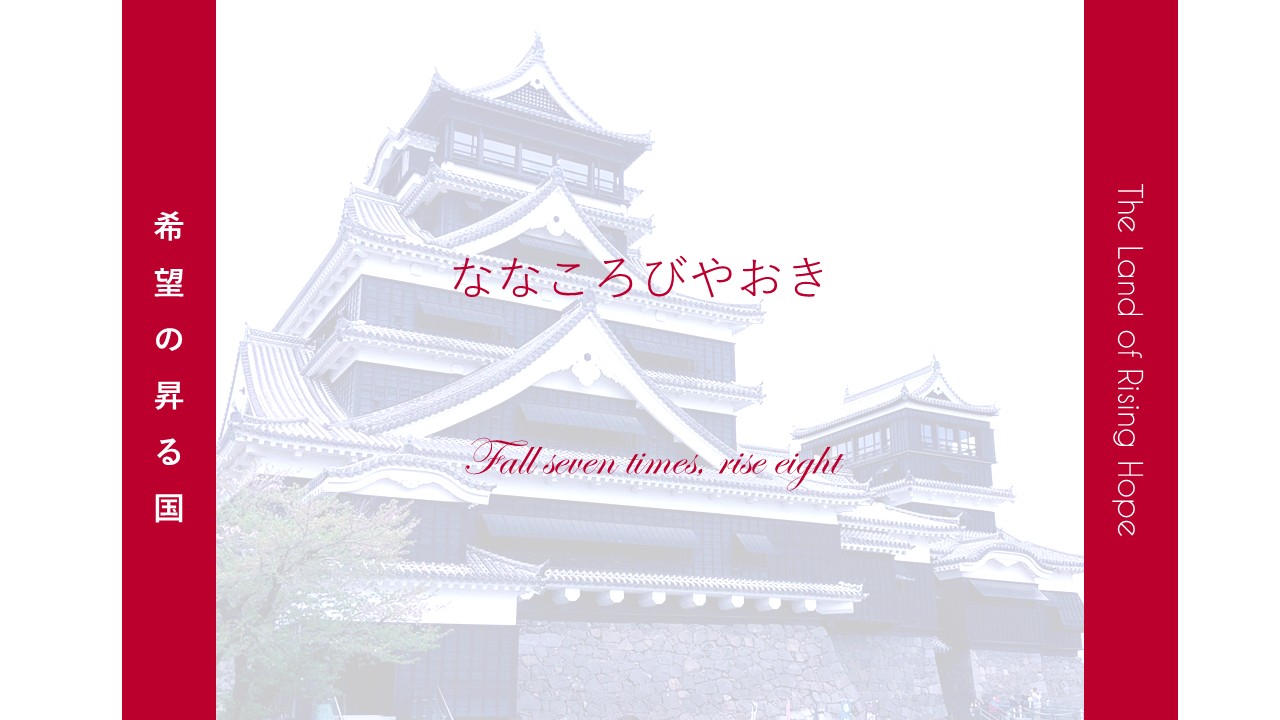
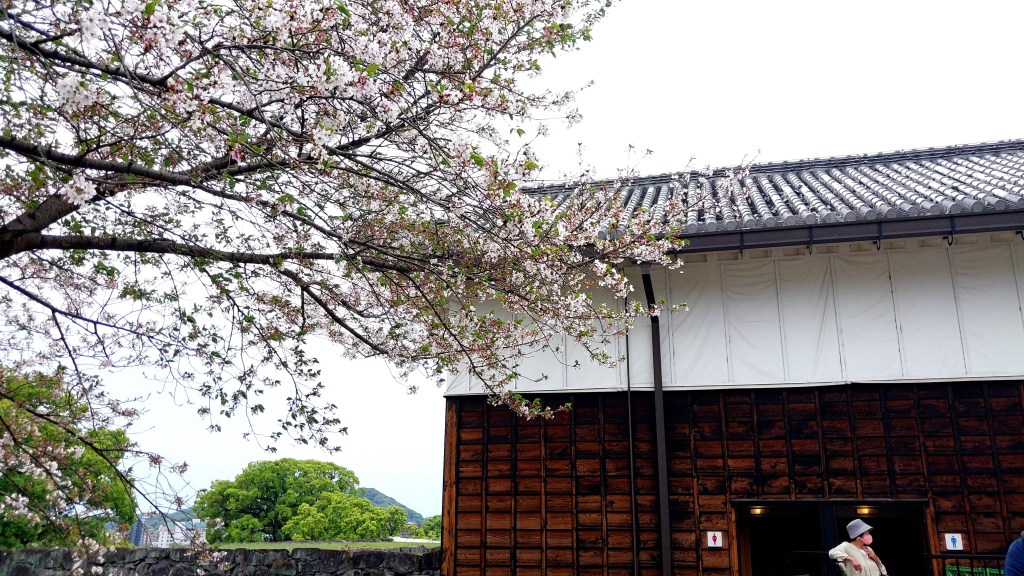
I set foot within the august grounds of Kumamoto Castle in the year 2024 during the season of the beautiful cherry blossoms or sakura さくら. The cherry blossoms represent fleeting moments and impermeance in life, and the inexplicable joy in experiencing them and cherishing them. The hope of return remains firm as always.
As I moved ahead in those hallowed grounds, my heart suddenly betrayed its accustomed rhythm. It faltered, it trembled, it skipped, as though it was seized by a sudden and overwhelming realisation. I was standing not merely upon a piece of ancient land, but upon living history. Time, in that moment, appeared to suspend itself, and the centuries seemed to converge in a single, breathless pause.
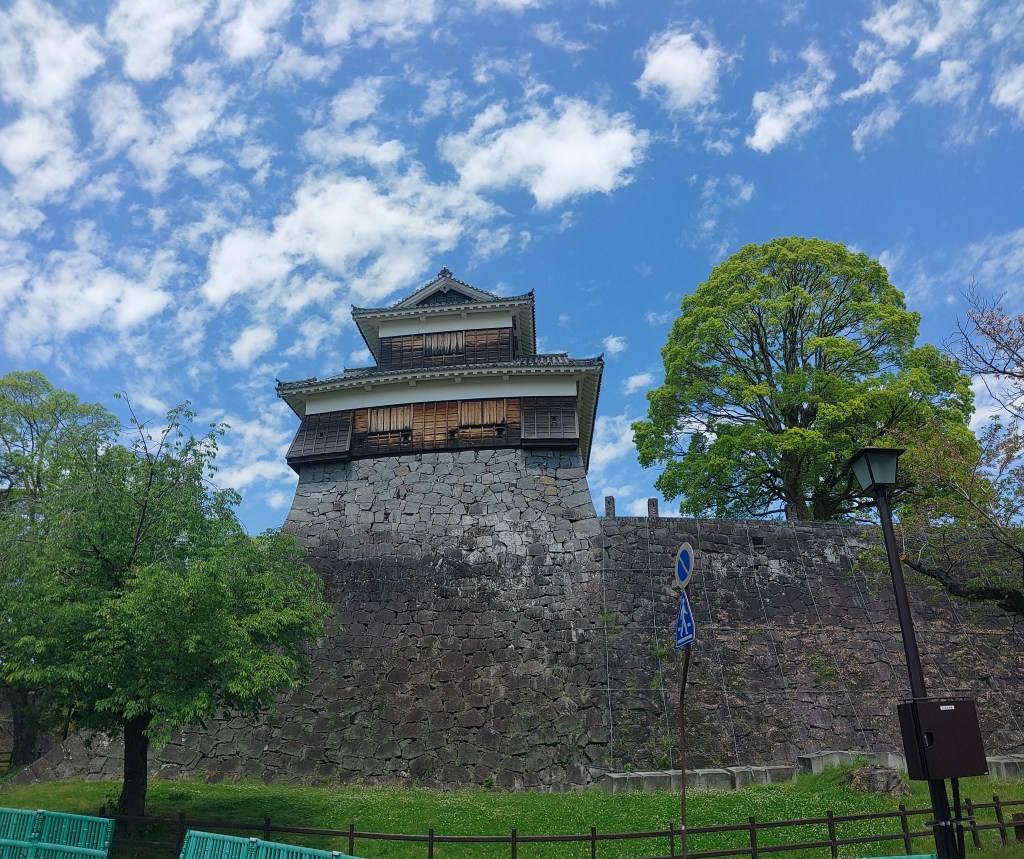
Before me lay stones – colossal, weathered, and fallen, strewn upon the earth in disarray. I found myself overcome with a quiet devastation. These were no common fragments of rock, no lifeless debris to be dismissed by the unthinking eye. These stones were vessels of memory, quarried and placed with purpose by hands long returned to dust. They had borne the weight of ambition, honour, vigilance, and sacrifice. And now they lay scattered, undone by the merciless force of nature, a devastating earthquake, unleashed upon this fortress in the year of 2016.
Involuntarily, my mind retreated into reverie.
There was a time, not so distant in the grand ledger of history, when this castle stood in undiminished majesty. Conceived by a master of the samurai order, it was wrought with such foresight and martial genius that it defied conquest itself. Impregnable by design and unyielding by intent, it proved its worth when the forces of Saigo Takamori, borne of conviction and defiance, laid siege to Kumamoto Castle for more than a month, yet found victory ever beyond their grasp.
These same forces, later romanticised as the final custodians of Japan’s ancient soul, would find loose and imperfect reflection in the cinematic elegy known to the modern world as The Last Samurai. Yet cinema, for all its splendour, can offer only an echo of truth.
The Last Samurai may have fallen.
But the samurai spirit did not.
It endured, indelibly impressed within these ramparts, sanctified in the soil beneath, and interwoven with the very sinews of the Japanese nation. Japan did not perish with the samurai. It was reborn through them. The nation modernised, refined itself, and ascended to excellence. The discipline, restraint, precision, and unrelenting pursuit of perfection that define Japan today stand as living testimony to the triumph of samurai ideals, upheld both by those who designed this formidable citadel and by those who, centuries earlier, laid the moral foundations of the nation itself.
And yet even this noble chronicle of resilience was not spared from an eclipse.
For in 2016, the earth chose to unleash fury upon Kumamoto. A devastating earthquake struck Kumamoto with merciless force, rending stone from stone and shattering walls that had withstood the fury of men. Vast portions of this historic stronghold were laid scattered. Stones once set with sacred exactitude were cast aside, their ordained order undone. For the people of Kumamoto, the blow was profound and deeply personal, for this castle was not merely architecture, but identity incarnate. And for me, one who loves Japan with a devotion both personal and profound, the wound was felt sharply.
For a while, I remained bowed beneath the weight of sorrow, my thoughts oppressed by ruin and loss. Yet even as grief settled upon me, another realisation began to stir within, faint at first, then steadily asserting itself with unmistakable clarity.
It arrived as a whisper, like a gentle breeze sensed only by the attentive traveller, carrying with it a breath of promise. It passed softly through the air, brushing the hair like a reassuring hand, calm in its touch, yet firm in its intent.
That quiet assurance did not linger in silence. It gathered strength, coursing through the fallen stones and the hearts of the people, until it rose as a storm. The breeze became a ravaging force across Japan, sweeping through its land and urging again and again why this sacred country is not merely the Land of the Rising Sun, but also the Land of Rising Hope and Impeccable Perfection. It was a force summoned by the legacy of their samurai forefathers, urging neither a battle for land, nor a resistance against a foreign power, but a struggle against despair itself. The breeze of hope had now swelled into a tempest of resolve, the unmistakable determination of the samurai spirit made manifest.
And then my grieving heart understood. If the samurai had endured beyond the fall of the so called Last Samurai, if their spirit had survived defeat, dissolution, and the violent upheavals of history, and had gone on to raise Japan from feudal isolation into a nation of order, excellence, and dignity, then surely they would gather once more. They would assemble again, not clad in armour nor rallying beneath banners of war, but bound by discipline and resolve, to make Kumamoto rise again. And indeed, they did. And indeed, they are doing so now, with unwavering precision and quiet determination.
The samurai spirit was never forged to command the forces of nature. Mother Nature has ever reigned supreme, indifferent to valour and unmoved by honour. Yet the samurai spirit was always destined to command the ascent.
Struck down seven times, one must rise eight. This is called nanakorobi ya oki ななころびやおき – the creed that shapes Japan’s soul. Such is the doctrine that defined the samurai. And such is the force now summoned to restore this marvel.
Today, the people of Kumamoto labour with almost sacred devotion. Each scattered stone is catalogued, marked, and returned with painstaking fidelity to the precise position decreed by ancestral hands centuries ago. This is no mere reconstruction. It is an act of cultural resurrection. Japan is a nation that venerates perfection, and thus this castle shall not be reborn in approximation or haste. It shall be restored stone by stone to the exact vision conceived by the samurai of old.
The samurai spirit never died. It merely changed its raiment.
It lives now in the quiet resolve of engineers, artisans, historians, and labourers, modern day samurai bound not by armour or blade, but by discipline, humility, and unwavering purpose. To walk through Kumamoto today is to witness that spirit in motion.
Japan endures.
Kumamoto Castle is a phoenix, rising anew from its own ashes.
And Kumamoto itself, long revered for its culture, castles, and storied past, now stands poised upon the threshold of a new destiny. The same spirit that once raised stone battlements now labours to erect a digital fortress for the modern age. This is a fortress not built with swords or cannons, but built with silicon, intellect, and precision. Metaphor yields to reality, as Kumamoto prepares to host the cutting edge of semiconductor innovation, an industry Japan once relinquished and now, with characteristic resolve, reclaims.
A city shaped by feudal lords and ancient moats shall yet become a digital diamond set within Japan’s crown. Where once watchtowers scanned the horizon for advancing armies, laboratories and clean rooms now stand vigilant, guarding the technological future of the nation.
This is no idle fancy. No wistful dream.
It is samurai spirit in action.
Be it the age of feudal lords or the era of artificial intelligence and silicon dominion, the samurai spirit has always ensured that Japan stands protected and excels.
And where could such a renaissance more fittingly commence than Kumamoto?
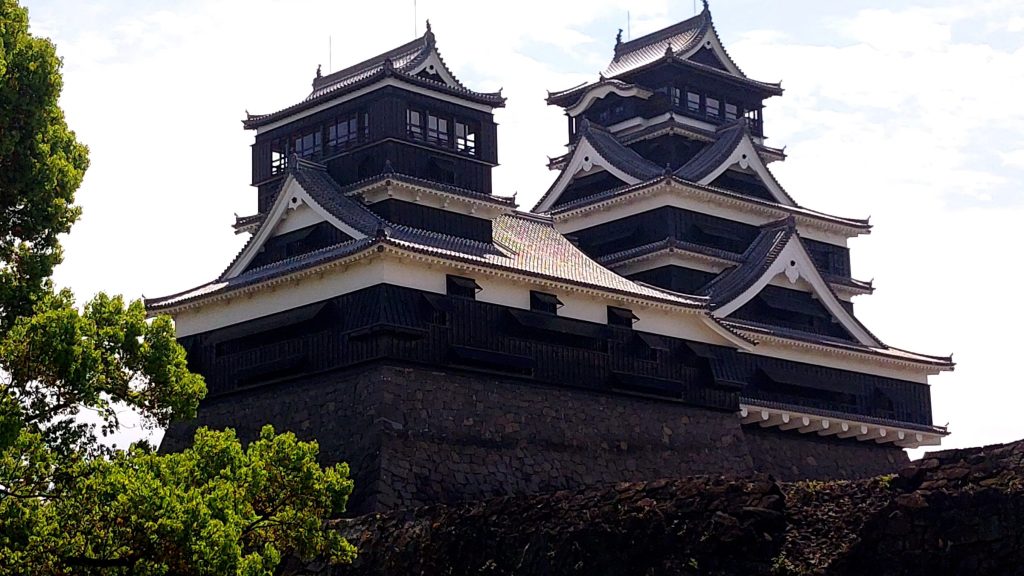
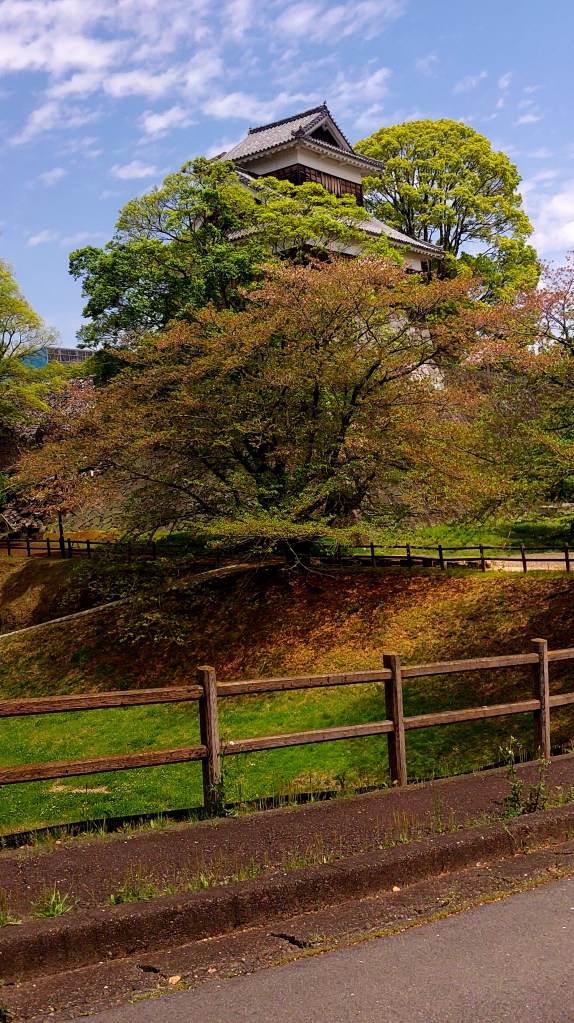
Haiku sequence
Ancient gates breathe time,
Heart stumbles upon stone paths,
Centuries exhale!
Silent walls still speak,
Hands of spectres rest on cold rock,
History stands tall.
Scattered stones weep loud,
Not rubble, but broken vows,
Time lies wounded here.
The earth roared unchecked,
Mountains bowed and walls gave way,
Steel wills met their match.
Oh shattered ramparts,
Even swords could not defend
From nature’s cruel hand!
Kumamoto wept,
Castle heart torn from the land,
Souls knelt in the dust.
Yet through grief, a breath,
Soft as wind through fallen grass,
Hope dared speak again.
A breeze touched the stones,
Not of ruin, but resolve,
Samurai still live!
Breeze becomes a storm,
Across Japan it thunders,
Rise again, rise now!
If the samurai
Outlived their final defeat,
They shall rise once more!
No armour, no swords,
Only hands, minds, discipline,
Steel forged into will.
Each stone finds its place,
Ancestors guide living hands,
Perfection returns.
Helmets and drawings, not swords, lead,
Clean rooms replace battlefields,
Honour wears new skin.
From ash and cracked stone,
The phoenix lifts its burning wings,
Kumamoto rises again!
Not built by cannons,
Nor by swords of ancient war,
But silicon dreams.
Fall seven times, rise
Eight with unbroken spirit,
Japan endures still!
Thank you for being patiently there supporting my content. Stay tuned for more content.
Appreciate your comments, views, likes and shares.
ありがとうございます / Arigatou Gozaimasu
© Abirbhav Mukherjee. All the pictures / videos posted in this article are my own unless otherwise mentioned.
 A Quest for the Uncliche