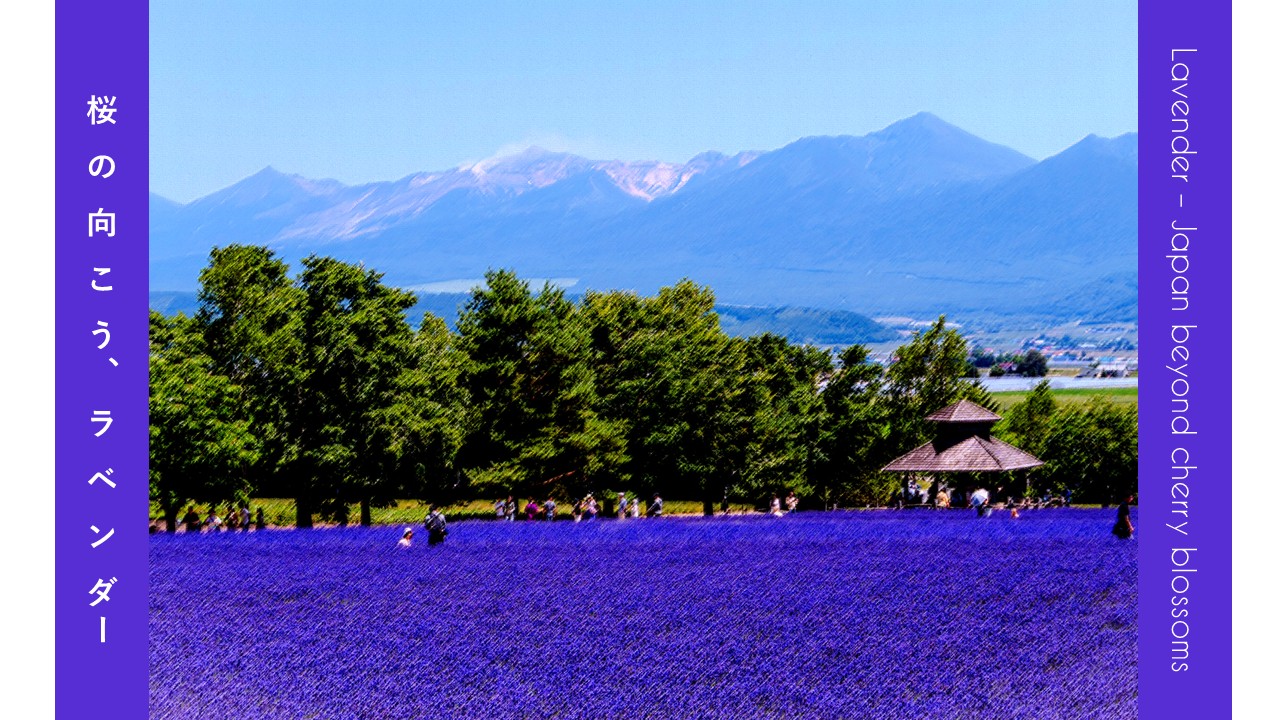
Japan is most often imagined in spring.
For many outside the country, the idea of Japanese beauty begins and ends with cherry blossoms: pale pink and fleeting – an embodiment of Ichigo Ichie (一期一会).
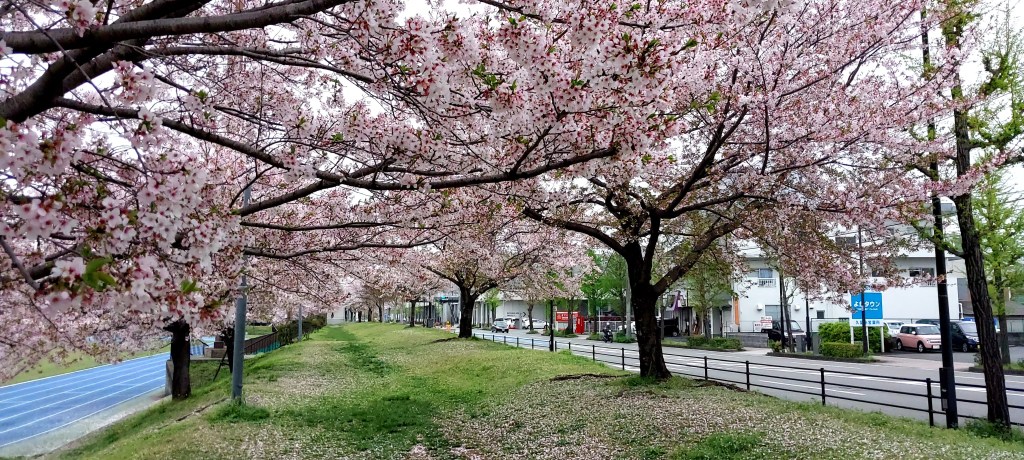
They bloom briefly, disappear quickly, and leave behind photographs that confirm what the world already expects Japan to look like.
In the northern island of Hokkaido, however, summer tells a different story.
Here, there is no countdown to beauty. No single moment everyone is waiting for.
Here, lavender blooms without ceremony, spreading across the land slowly, deliberately, almost indifferently. It does not seek attention, and because of that, it is often overlooked.
Lavender is not Japan’s alternative blossom.
It is Japan’s misunderstood one.
It’s perhaps a representation of Japan and its cynosure – beyond sakura.
Hokkaido’s Quiet: A Landscape that similar – yet so different
Hokkaido does not behave like the rest of the country.
The second largest island and the largest prefecture of Japan feels wider, quieter, less constrained. Roads stretch into the vast emptiness. Farms occupy space unapologetically. Cold and ice rule the roost for most of the year. However, like the rest of Japan, volcanism and onsens are omnipresent. This geography shapes behaviour as much as it shapes scenery.
Lavender fits here because it serves the land before it serves the eye.
The fields are aligned with slopes, soil, and drainage, not with ideal viewpoints. Rows bend slightly, unevenly, following practical decisions rather than visual symmetry. There is no attempt to perfect the landscape for visitors, and that refusal becomes part of its appeal.

Beauty here is not artificial.
It is organic, omnipresent and untamed.
Farm Tomita: The difference between going with the flow and setting one
Farm Tomita in Furano is the place where visitors form their understanding of Hokkaido’s lavender fields. Its popularity sometimes works against it. Crowds suggest spectacle. Familiarity invites dismissal.
And yet, Farm Tomita remains fundamentally agricultural.
The farm does not go with the flow. Rather it sets one.
Harvest schedules of the farm do not pause for visitors. Certain areas are restricted without explanation. The fields are not redesigned to improve flow or photographic convenience. Visitors move along the edges, observing from paths that exist for access, not performance.
What is visible here is not choreography, but continuity.
The lavender fields exist not just for the tourists. They exist for purposes beyond mere tourism – they play a part in powering the local economy of Furano and adjoining areas.
The place is also a hub for high value products like lavender based cosmetics, essential oils and foods. Much of the produce is thus sold widely across Japan and even exported overseas.
The differentiator here is that Furano is not all lavender blossoms – the blossoms are a part of this. Tourism is just another alternate avenue to allow the spectators from near and far enjoy this aspect of Japan – the one which is beyond the sakura.
Lavender: Calm, ethereal, unperturbed
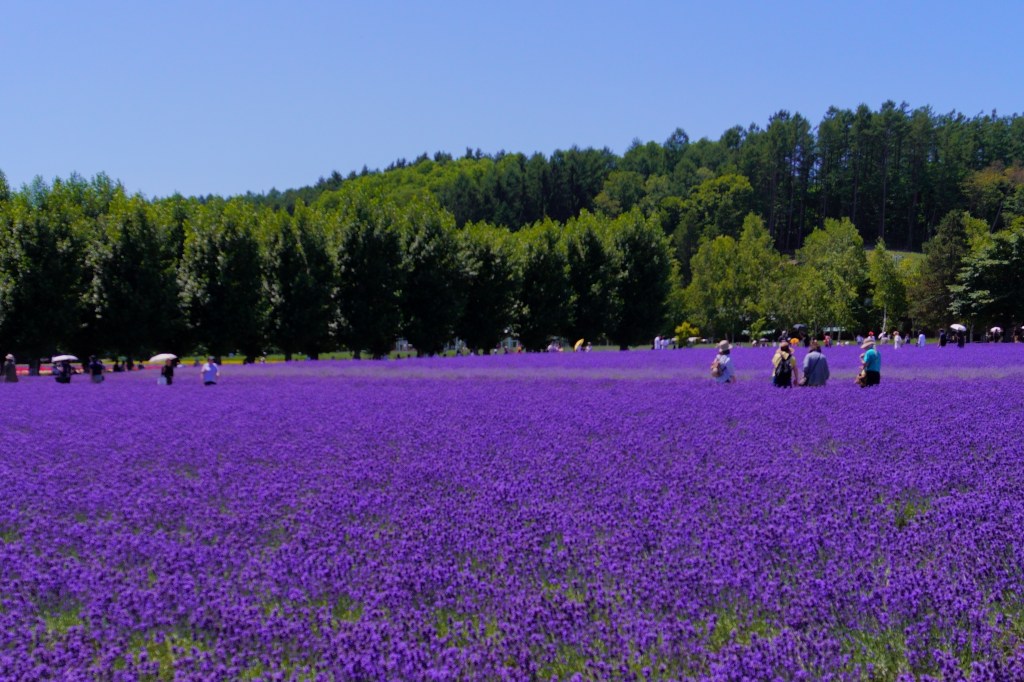
Lavender is frequently photographed as intensity: deep purple, saturated and a bit overwhelming. In Hokkaido, the colour behaves differently.
Light is softer. The sky is paler. Distances stretch the eye outward rather than drawing it inward. Lavender does not overwhelm the land; it punctuates it. Purple appears, recedes, and dissolves into green, grey, and sky depending on cloud cover and time of day.
This restraint is easy to lose when colour is isolated from context. The real power of the fields lies not in vibrancy, but in proportion. Lavender is present, not insistent.
Beyond the Cherry Blossoms: When beauty stays
Cherry blossoms dominate Japan’s global image and are considered as the cynosure of Japan. Yet, their beauty is also an embodiment of mono no aware (物の哀れ) – a bittersweet theme of impermanence in Ichigo Ichie – because they disappear quickly. They invite urgency. They invite a feeling of letting go. Lavender does the opposite.
It blooms over weeks, not days.
It demands labour before and after.
It leaves behind harvest rather than absence.
This makes lavender harder to symbolise, and easier to overlook. It does not lend itself easily to metaphor. It is seasonal without being sentimental, beautiful without being brief.
In a sense, it is partly opposite to mono no aware.
Lavender evokes a sense of permanence – the beauty is here to stay.
In this way, lavender complicates the idea that Japanese beauty must always be fleeting. In this part of Japan, beauty stays long enough to be worked upon.
It is like a whole new world in itself.
Mount Tokachi: The silent and watchful guardian of Furano
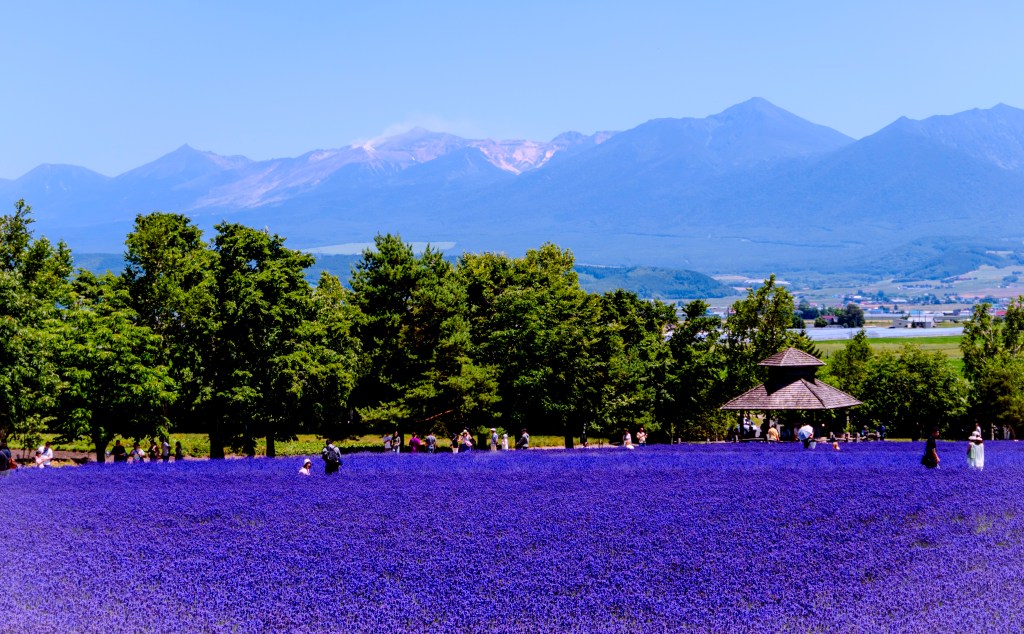
From certain points in the fields, the land does not end with lavender. The horizon rises quietly. And there one can get introduced to the watchful guardian of Furano.
Mount Tokachi does not announce itself. It sits in the distance, sometimes obscured, sometimes barely visible. There are no signs insisting that you look.
And yet, its presence is fundamental.
The volcanic activity that shaped this region enriched the soil long before lavender arrived. The fertility that allows agriculture to persist here — quietly and consistently — is inseparable from the mountain’s existence. Mount Tokachi and several other volcanoes are the reasons why Hokkaido’s soil makes the place one of the leading agricultural producers of Japan – and that too with minimal usage of chemical fertilisers. The availability of such clean foods, consequentially, is another reason explaining the good health in general of Japanese people, as explained in Ikigai (生き甲斐).
Lavender and Lava: Tenderness Sutured to Ferocity
Lavender bruises easily. Its stems bend. Its flowers crush at a touch. A volcano is violent, unstable, indifferent to scale.
In Hokkaido, these two realities coexist without contradiction.
The fields do not deny the mountain’s ferocity. They are made possible by it. The landscape does not dramatise this relationship. It simply holds both truths at once.
This quiet juxtaposition is often missed, especially when photographs focus only on colour. But when seen together — the softness of the fields and the weight of the land behind them — the balance becomes clear. And that’s what makes this irresistably beautiful.
(More on volcanoes, especially “Hell valleys” in my blog post: のぼりべつ: The Fury of Hell – じごくだに)
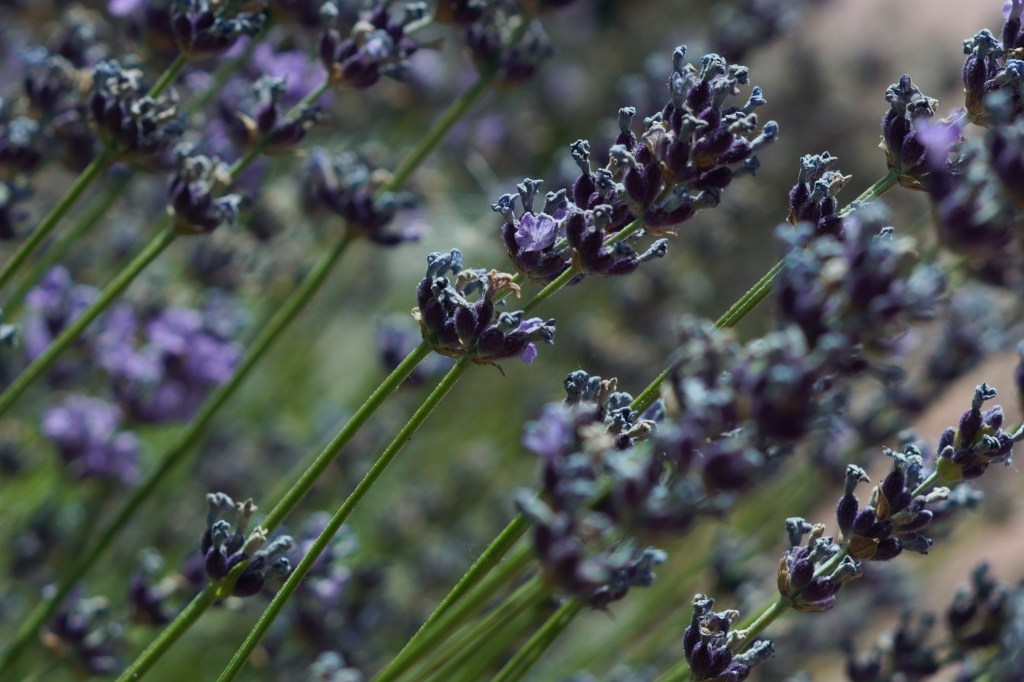
A whole new world
Japan is not only defined by what disappears quickly.
In Hokkaido, lavender reveals another rhythm: one that is shaped by land, perseverance, and hard work. It blooms not to be watched, but because the conditions allow it to exist. It grows in soil shaped by forces far more violent than its appearance suggests.
Lavender in full bloom, under the serene watch of a towering volcano, and the quiet accord between gentleness and force come together to reveal Japan anew, and Furano the most of all. This is a whole new world, one that unfolds without spectacle, revealing itself slowly to those willing to notice. Here, every turn is a surprise, not through excess, but through depth. The landscape offers a hundred thousand things to see, each one unperturbed, each one rewarding attention. And for the inquisitive traveller, a subtle shift occurs: there is no going back to where one used to be. In Furano, every moment feels red-letter, not because it dazzles, but because it endures: a place that quietly insists no one who is truly looking should ever dare close their eyes.

Sharing this whole new world, with you….
The spectacular pictures of lavender blossoms might entice you to pay a visit to Furano. Let me share some insights on that.
- Time: Prefer visiting during summer, especially between mid-July to mid-August.
- Stay: Closest places to Farm Tomita are Biei, Furano and Asahikawa. These places can offer decent accommodation, though rates may be exorbitant during lavender season. Consider booking in advance, or staying in a major city like Sapporo, Asahikawa or Obihiro.
- Commute: Train services exist, but catching buses from the nearby railway stations to such lavender fields might be inconvenient as the buses are infrequent. Taxis might be expensive and equally infrequent. It’s better to take a day trip from a nearby major city like Sapporo or Asahikawa and cover Farm Tomita and nearby locations like Aoiike Blue Lake and Shirahige Blue Waterfalls. Such options are available with local bus operators or online travel aggregators like Klook. Alternatively, rental cars may also be used.
- Food: Won’t be too much of a problem as Farm Tomita itself has several options. However, you can still carry food if you want. Make sure you carry the garbage with you till you find the nearest trash can.

Travel to lesser-known places is not an act of escape. It is an act of attention. In towns like Furano, where life continues without performance, the traveller becomes a participant rather than a consumer, supporting local farms, family-run cafés, small producers, and rhythms that long predate tourism. Such journeys reward curiosity with depth. Landscapes reveal their histories slowly, people extend generosity without expectation, and the land offers lessons in restraint, labour, and coexistence. What remains is not a checklist of sights but a quieter understanding of place, absorbed through walking, watching, and waiting. And with that understanding comes a gentle certainty. This is not a visit that feels finished. It is one that leaves space for return, carrying the hope of coming back not to rediscover, but to recognise.
PS: By the way, Japan is indeed a whole new world in itself, with several places hosting such unbelievable sights. Stay tuned for more.
Thank you for being patiently there supporting my content. Stay tuned for more content.
Appreciate your comments, views, likes and shares.
ありがとうございます / Arigatou Gozaimasu
© Abirbhav Mukherjee. All the pictures / videos posted in this article are my own unless otherwise mentioned.
Notes:
- Ichigo Ichie and Ikigai are references taken from the books “The Book of Ichigo Ichie: The Art of Making the Most of Every Moment, the Japanese Way” and “Ikigai: The Japanese Secret to a Long and Happy Life“, both authored by Héctor García and Francesc Miralles.
- “A whole new world” is a song of the movie “Aladdin” (1992 and re-release 2019) released by The Walt Disney Company. Click here to hear the song.
 A Quest for the Uncliche